
Jeff: So, basically, yesterday — Tuesday — me and Wendy went to Somerset House, to the Courtauld Institute, to see the Barbara Hepworth exhibition1, which is really great. I’m a big fan. Looking at her work relaxes my mind, and I needed my mind relaxing.
Walking through Temple Gardens before getting to Somerset House, we passed a bloke who was sitting on a park bench (that could well have been the place he called home). He was rolling a smoke and singing a song “I was looking for some action and all I found was cigarettes…”. He ended there. We found it funny. Wend asked “what was that song? it’s familiar” I filled in the rest of the verse and we were both suddenly overcome by laughter. The memory bank was blown open.
Over the weekend, familiarity made the memory bank open up again. We’d listened to Norman Cook on Desert Island Discs2. It’s a very enjoyable listen. You and I know him — he’s a nice bloke, he’s got great taste in music, and the chemistry between him and Lauren Laverne was good. I’d recommend it.
But somehow, yesterday morning, we went for a little walk through the gardens on the Embankment before going into the exhibition at Somerset House, and we started talking about that basement flat we lived in for several years on Cromwell Grove, just off Shepherd’s Bush Road. I’m sure you remember it.
Robin: I remember it very well.
Jeff: If you don’t, I can tell you that you were most definitely there.
Robin: Evening in the pub on the corner, then walk down to Number 17.
Jeff: Yeah, absolutely. We were thinking about that flat, and I very clearly remember — I don’t have total recall, I’ve actually got very little recall — but one of the things I do vividly remember is the night we all ended up back there after the Saint Etienne show at Shepherd’s Bush Empire3.
You’ve just told me it’s actually well documented in the Believe in Magic4 book. I haven’t reread it recently, so I’m glad it’s there, if only to back up my claims of not-so-total recall.
I remember it being me, you, Wendy, Martin, Tom and Ed. There would’ve been others. I remember us all lying on the floor in that living room, and I remember playing three records that just connected with everybody. We were all high, obviously, but those records connected with everyone so completely that suddenly your vision and enthusiasm for doing a club night... suddenly the foundations of the idea were being built.
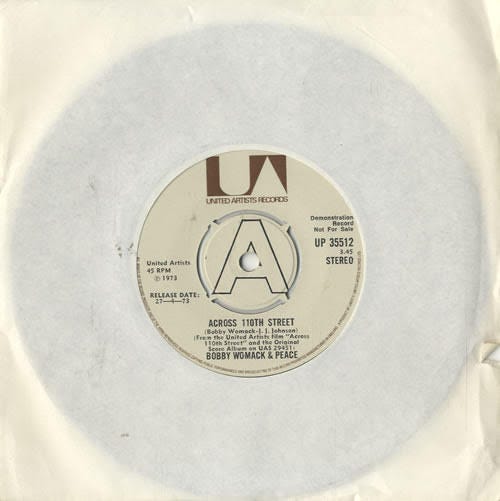
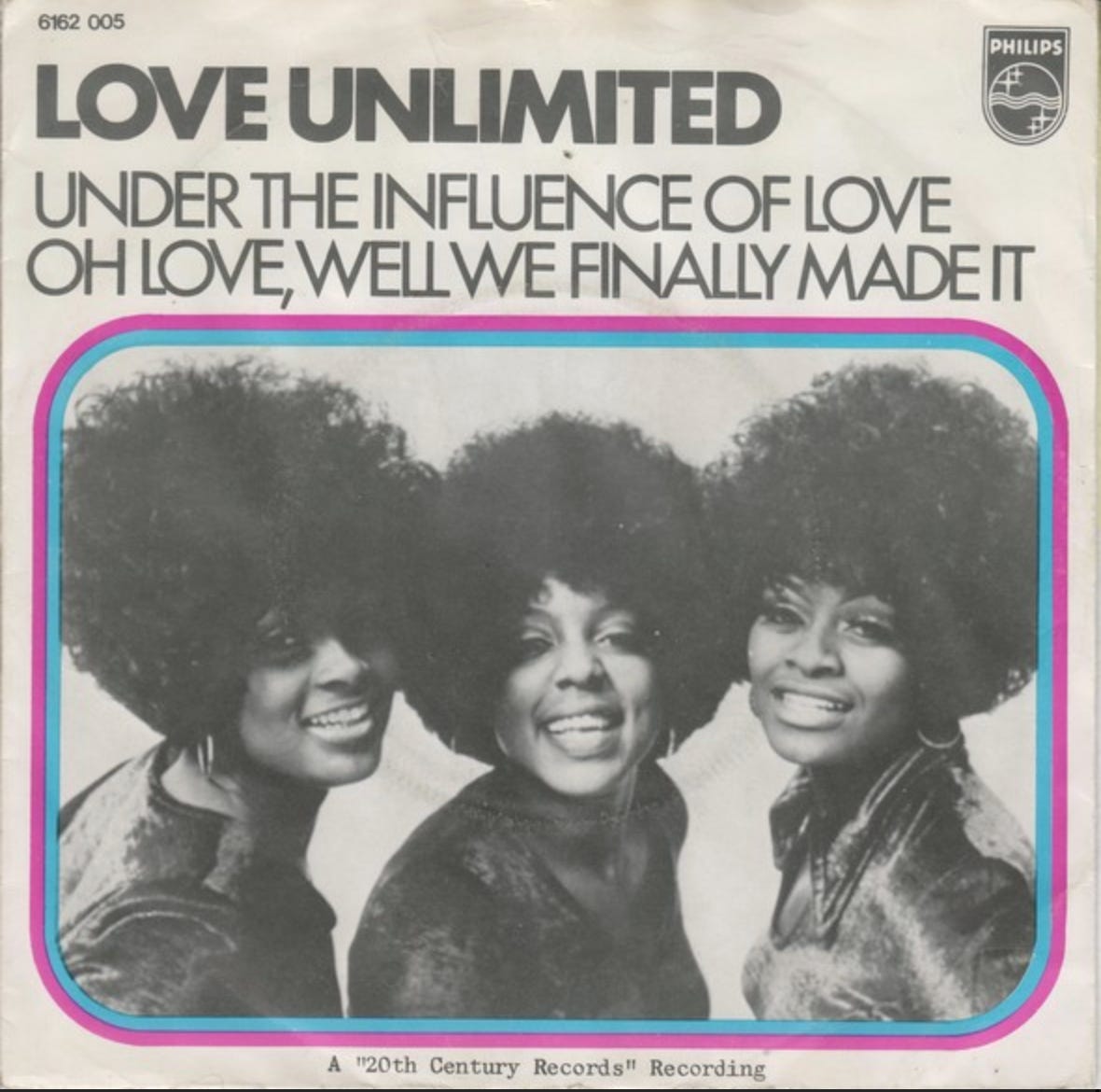
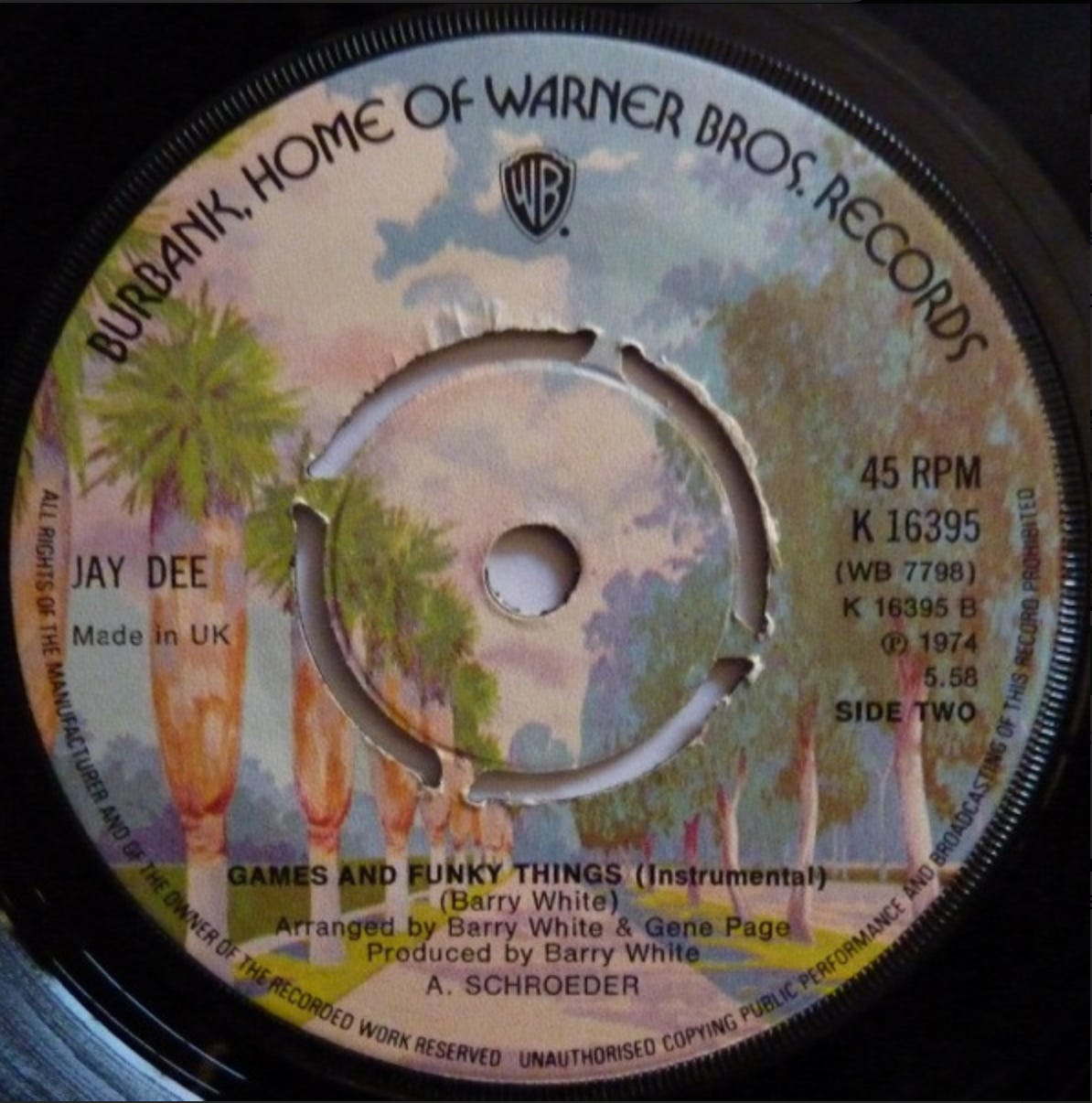
Those three records were Bobby Womack’s “Across 110th Street”5, Love Unlimited’s “Under the Influence of Love”6, and Jay Dee’s “Funky Games and Things”7 — the instrumental B-side to “Strange Funky Games and Things”, just to confuse you.
I think Tom and Ed actually chose to play the Barry White version of “Strange Funky Games and Things” in their sets rather than this one.
Robin: I think you might be right.
Jeff: for me this is the version, the Jay Dee one. Barry White produced it and Gene Page arranged it, it’s tougher than the Love Unlimited one.
Anyway, we played those records, and I remember Tom and Ed just going, “Fuck... wow.” Imagine if we played these records alongside the techno and the hip hop that their sets were built around.
It really was the thing that had been missing — or maybe not missing, but waiting to happen. It gave your idea a bit more flesh, and caught me and Martin up with your enthusiasm.
Robin: What’s interesting is that one of those records became the first record every week (Strange Games and Funky Things), and another became the last, or the last-but-one (Under The Influence Of Love, which was occasionally followed by The Specials’ You’re Wondering Now), at pretty much every Heavenly Sunday Social. Apart from the one week when “Across 110th Street” got played, those two records became the bookends.
Jeff: those three records were obviously pivotal that night, but also for everything that came afterwards.
Robin: Yeah. It eventually came down to two of them, and they bookended every Sunday. You’d have Weatherall warming up8, or David Holmes, or Justin Robertson, and then Tom and Ed would start with “Funky Games and Things”. And the atmosphere would change. Prior to that, it had been a kind of nervousness. When that record started, it was like an emotional explosion. This is it, it’s happening. And when “Under the Influence of Love” came on, it was time to go home. There wasn’t much that was going to happen after that, the place had been flattened.
Jeff: But I remember that feeling so vividly. That beautiful thing when you’re with friends and everybody shares exactly the same emotional connection to music. It came from three songs. Then it made me think about Lindy Layton, who was in Beats International with Norman Cook. She used to come down to the Albany with Damian Harris, and she got in touch with Norman and basically said, “You know that music you’ve been imagining in your head all your life? It’s actually happening in the basement of a pub on Great Portland Street every Sunday night.”
He came up shortly afterwards, had one of those real experiences, and — going back to what we were talking about before — and he rechristened himself Fatboy Slim and he was away. So I wonder... when we were all lying on the floor in that flat on Cromwell Grove in Shepherd’s Bush... I wonder… would Norman Cook have ended up on Desert Island Discs if that after hours session hadn’t have happened?
Robin: The Norman Cook thing is really interesting because he remains an eternally lovely guy. He’s played the Social a few times, literally coming out of the toilet with record bags and DJing to a room full of totally frantic kids. Then next weekend he’s doing four nights on Brighton Beach9, tens of thousands of people down there and very, very up for it. And he’s always been happy to scale things up or down. The number of times he did the Social at Turnmills for us... you’d pay him 200 quid, a couple of grams and ten pills. He wasn’t at all interested in making money. The money paid his mate’s petrol to and from Brighton. He genuinely wasn’t motivated by cash at all. For the three years Turnmills ran, he’d just come and play. It was amazing, really. He really didn’t need to, he just wanted to. It was a genuine connection.
Jeff: Exactly. And he pointed out on Desert Island Discs that he and Damian had already started the Big Beat Boutique before the term “big beat” became attached to a particular style of music.
Robin: Back then that music didn’t really have a shape. That’s probably a better way of putting it. People were making it, and it was often called trip hop, but “trip hop” was also being used to describe Massive Attack or Tricky records, which didn’t really fit what Norman or the Chemicals were doing. Everything was mushed together. Chemical Beats and Protection by Massive Attack are not the same thing. Both incredible, both totally unalike. It was all one loose scene before anybody had worked out what to call it. That early period really did feel like capturing lightning. Barry White productions leading into ten-minute German techno records, Leftfield remixes of Renegade Soundwave, Flowered Up’s “Weekender”... it didn’t really matter. It could be whatever it wanted to be.
Jeff: Yeah. It was just about what was good. So do you think Norman... I quite like the idea that he might never have ended up on Desert Island Discs if we hadn’t have had that daft night. Maybe he’d just be some bloke making records in Brighton.
Robin: I’d like to think we aren’t claiming responsibility for the success of Fatboy Slim...
Jeff: But it’s only a few degrees of separation, isn’t it? It’s nice to draw those lines sometimes because you realise there’s a reason for doing these things.
Robin: There’s a reason you have mad conversations in pubs that spiral into even madder ideas that you actually end up doing.
Jeff: Yeah, it’s called running a fucking record label.
Robin: Pretty much.
Jeff: It’s just complete fucking nonsense. I love it.
This week’s Heavenly hits…
Andrew: Anywhere But Here - Stories of the Search for Belonging in Modern Britain by Nicola Kelly (Elliott & Thompson). Essential reading. This book brings to life the human stories involved in one of the most salient and politically toxic issues of modern times.
Katherine: The Pansy Project, Waterside Arts, Sale, Trafford. An exhibition documenting the quiet, yet powerful act of planting pansies at sites of homophobic and transphobic abuse worldwide by artist Paul Harfleet. Each flower is documented, titled after the words of the abuse, and added to this website. Each picture in the exhibition gently confronts hate crime and brings visibility to LGBTQ+ experiences that often go unreported.
Jeff: New music - Aljahalat by Amanar De Kidal, old music: Gregory Isaacs - Mr Know It All
Daisy: I’ve been really excited by a new zine called L’ALARME that Andrew Savage of Parquet Courts has co-written/produced. It’s primarily about music, dance, and art but also describes life in Marseille (where A. Savage is now based). It’s filled with interviews with people who live there and amazing drawings and graphics. Every page is written in both English and French. It’s a thing of beauty! They also host a regular club night under the same name, which I will definitely be going to! You can get the zine HERE.
Georgia: I’ve been really enjoying Adelina Sasnauskaitė’s NTS show ‘On The Road w/Adelina S’. Adelina is a multi-disciplinary artist who I have been following for the best part of the last decade (she has tattooed me a few times over the years!) She has been travelling the Sahel region documenting the musicians and artists that she meets along the way, and this radio show includes field recordings, music and stories from those journeys. It completely transports you to a different place, perfect for some musical escapism. Adelina also runs a project called Lost Memory Archive Senegal, where she is digitising and archiving thousands of negatives from photographers across the region. You can read more about the project and find ways to support their work via their Instagram @lost_memory_archive_sengal.
Robin: No idea why, but whenever an overheated summer like this comes along, music becomes something of a binary choice. It’s either heavy metal or ambient. That’s it. I realise that combination sounds like some rotten sub-genre you’ve luckily managed to avoid, but it’s all my brain can cope with beyond checking the ‘Feels like’ section on that day’s temperature and then melting at the thought of it. Ambient wise, this record from over thirty years ago has hugely helped make days melt away into nothing. But when that approach just isn’t enough? New Deftones album, played at punishment volume, custom designed to annoy anyone else in earshot.